
Cacique
Guacana
Chocolate infused with coffee.
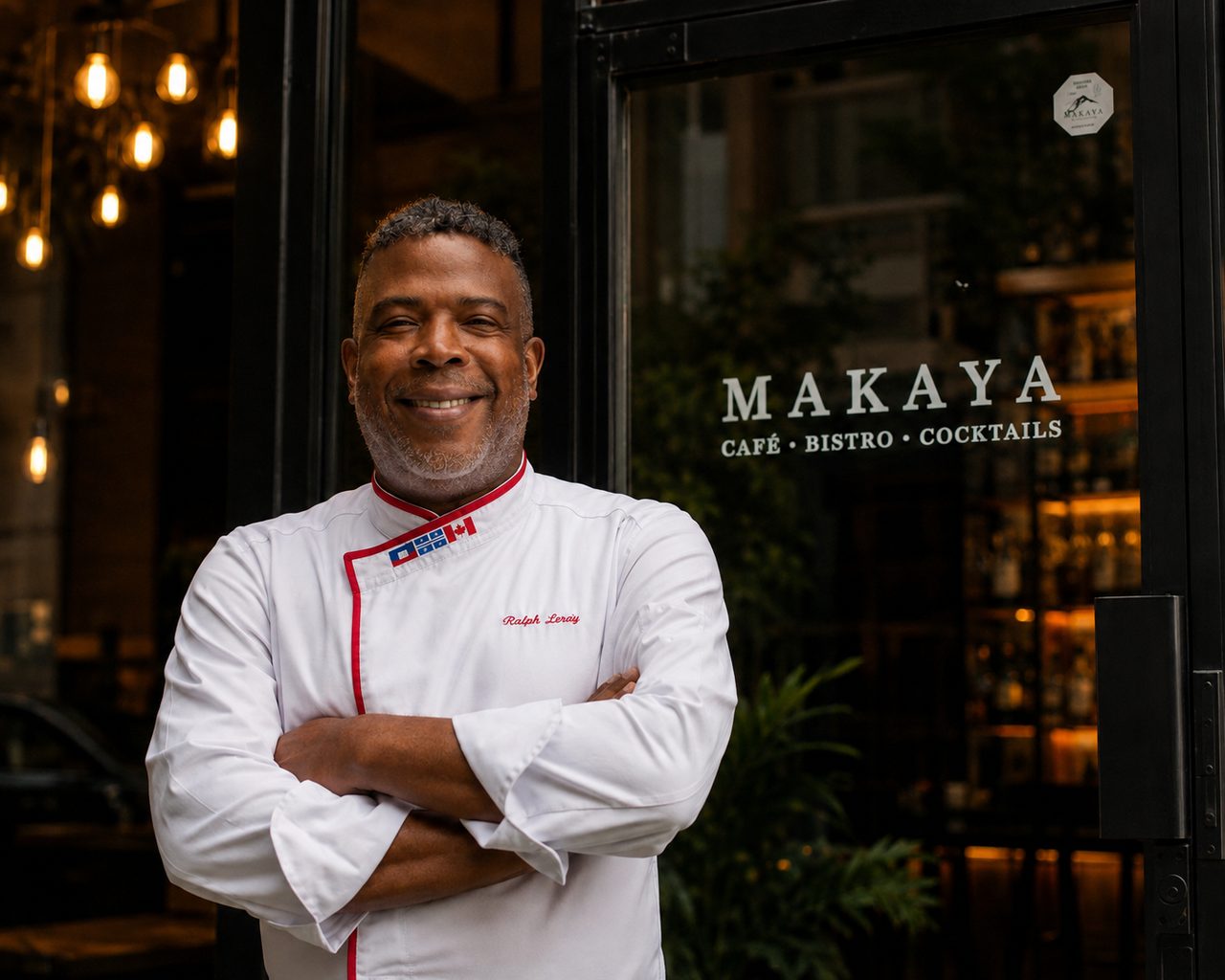
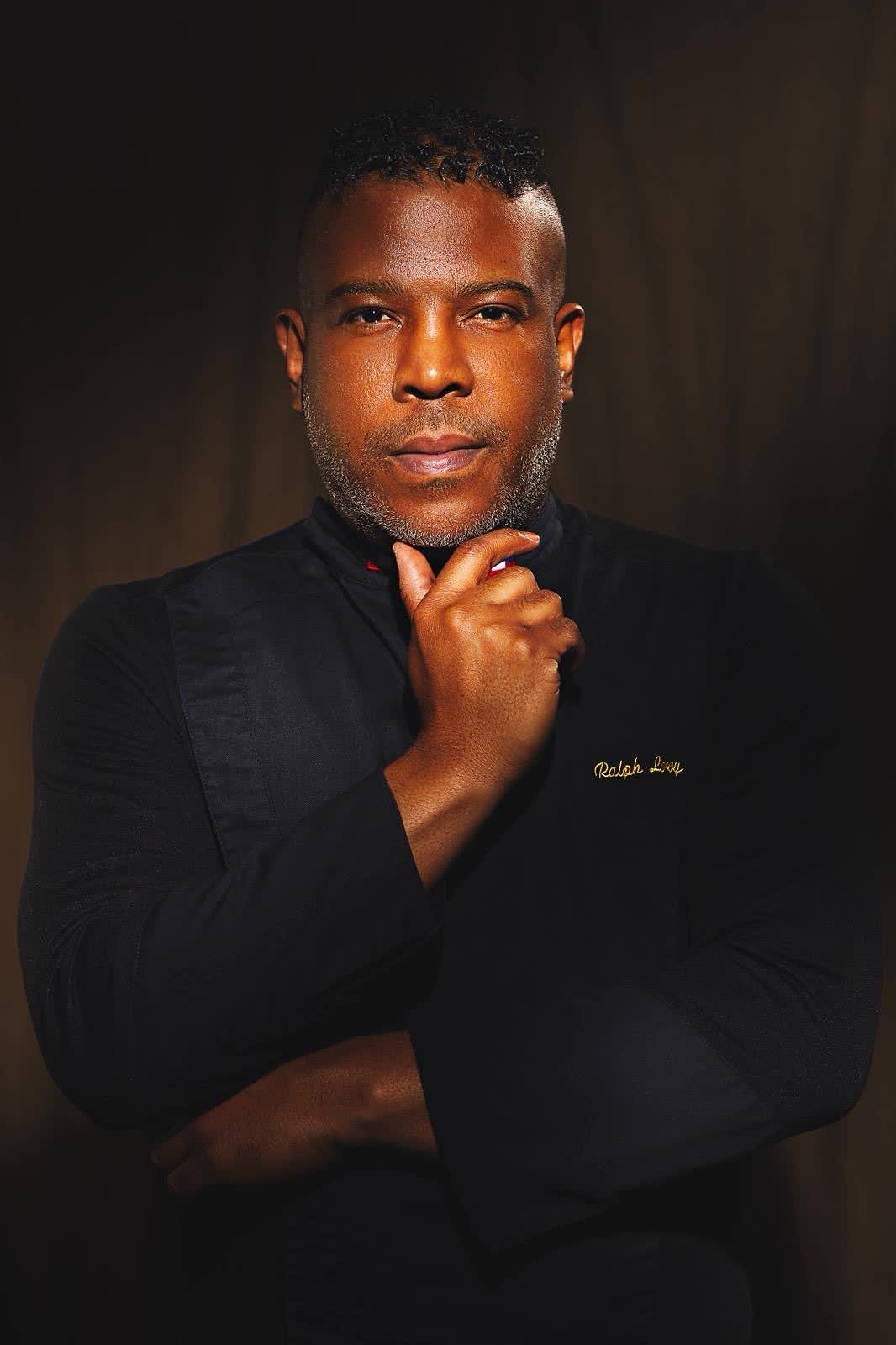
Master chocolatier
Born in Cap-Haïtien, trained in Montréal, Ralph Leroy Prophète was first a menswear and jewellery designer. For four years he built chocolate accessories for the runway shows of the Salon du Chocolat. In 2015, meeting the growers of the FECCANO changed everything: he closed the fashion studio and founded Makaya in Port-au-Prince on 16 July 2016, the first bean-to-bar laboratory in Haiti.
Trained in tempering in Italy, he signs bars made of two ingredients, collections shown at the Salon du Chocolat de Paris and, since 2023, a Montréal table where his chocolate is poured as much as it is eaten. The press has called him the ambassador of Haitian chocolate.
01 · The journey
Born in Cap-Haïtien, based in Montréal, working in Port-au-Prince. The whole story of this house fits between those three cities.
2009
Autumn-winter, shown in Montréal. He is also known as a jewellery designer, a detail that explains a great deal about the objects he makes today.
2009–13
For four years he builds fashion shows whose accessories are made of chocolate. Cocoa arrives in his work as a material long before it arrives as a trade.
2015
He opens a studio in Haiti and goes up to the North to see the cooperatives. “My meeting with the FECCANO changed everything.”, and, later: “The growers brought me back down to earth. I understood I had to make a choice.”
2016
A sleepless night looking for a name. The laboratory opens in Port-au-Prince: the first bean-to-bar laboratory in Haiti. Not in the North, as he wanted, but where the infrastructure was.
2018
Six months in Italy on tempering, a sculpture masterclass in Chicago, bean-to-bar training in Trinidad. He does it himself rather than hire experts: “to acquire the skills myself and be able to pass them on, rather than receive them from experts who, once my team had been formed, would leave.”
2022
A binational collection with Jens Kamin of Definite Chocolate, Dominican Republic. Three bars named after Taíno caciques. Sold out at the Salon du Chocolat in Paris.
2023
A chocolate lounge and a Haitian table. The same year, the team in Haiti falls from twenty-three to seven under the weight of the security and economic situation. Ninety per cent of turnover now comes from abroad.
2025
A gluten-free biscuit of Haitian cacao, coconut and breadfruit flour, presented at the Salon du Chocolat from 29 October to 2 November, then in Montréal on 15 November.
02 · The name
“I spent the night of 15 to 16 July 2016 looking for a name that would represent Haiti, my culture, my origins, and for one reason or another the word Makaya kept coming back into my head. In the middle of the night, on 16 July 2016, I woke up, I started working, and I registered the name MAKAYA, which reflected exactly what I wanted.”Ralph Leroy · Juno7, 16 July 2020
What the word carries
In kikongo, makaya means leaves. The Makaya is also a rite of Haitian vodou inherited from the Bantu peoples, chiefly from the Congo, a rite bound to nature and to plants, where the leaf is both remedy and protection. Ralph Leroy has never publicly explained the name beyond the night it came to him. We record the cultural ground here without putting words in his mouth.
The signature
Ralph Leroy explains the phrase himself: it “refers to the rich past of our land, and to gold, that most coveted precious element, which the soil of Haiti produced in its time.” The gold on this site is not decoration. It is a citation.
03 · The workshop
By 2020 they were twenty-three, mostly young women between twenty and thirty, trained in the laboratory, on gestures taught nowhere in Haiti. One of them, Duasmine Paul, put it plainly: “Even in cooking schools, you don't learn this.”
In 2023 the team fell to seven. The security and economic situation in Haiti did that, not the demand. We say it because a house that asks to be believed on its traceability cannot be selective about which numbers it publishes.
04 · The archive
Hispaniola carries two countries and one cocoa history. In 2022, Ralph Leroy worked in the laboratory of Jens Kamin, Definite Chocolate, Dominican Republic, selecting pods, tempering, roasting, blending ganaches together. The collection took the Taíno name of the island: Quisqueya, mother of all lands.
Cacique
Chocolate infused with coffee.
Cacique
Peanut ganache.
Cacique
Cashew and walnut.
Launched at the second Dominican chocolate festival in July 2022, then at the Salon du Chocolat in Paris that October, where the stock sold out. Brought together by Caribbean Export under the binational cocoa value-chain project, with EU funding.
The Choucoune biscuit
05 · The latest
Cacao from the North. Breadfruit flour from the Grand'Anse, milled gluten-free. Coconut. Choucoune is the name of a famous poem by Oswald Durand, and of the legendary Pétion-Ville cabaret.
It comes out of the P.R.O.F.I.T. programme: four breadfruit processing centres in the Grand'Anse, a capacity of 1 600 tonnes a year, fifty-five thousand schoolchildren in 255 schools. Partners: Trees That Feed Foundation, the ILO, the Norwegian Ministry of Foreign Affairs and the World Food Programme.
06 · What comes next
The stated ambition has not changed since 2016: to build the workshop where the cocoa grows, so the value stays with the growers. The security situation has pushed it back. It has not cancelled it.